The Test of Time
Ana Paganini & Inês Gonçalves
07.02.2026 :: 28.03.2026
Wednesday to friday 03:00 pm - 07:00 pm, saturday till 08:00 pm
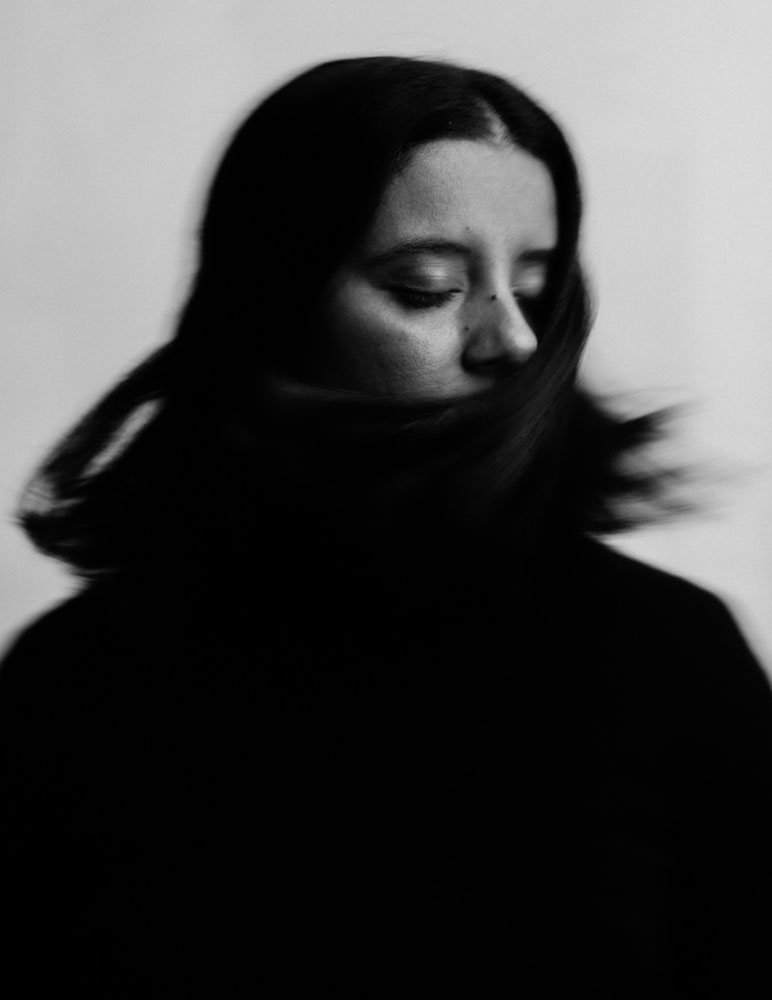
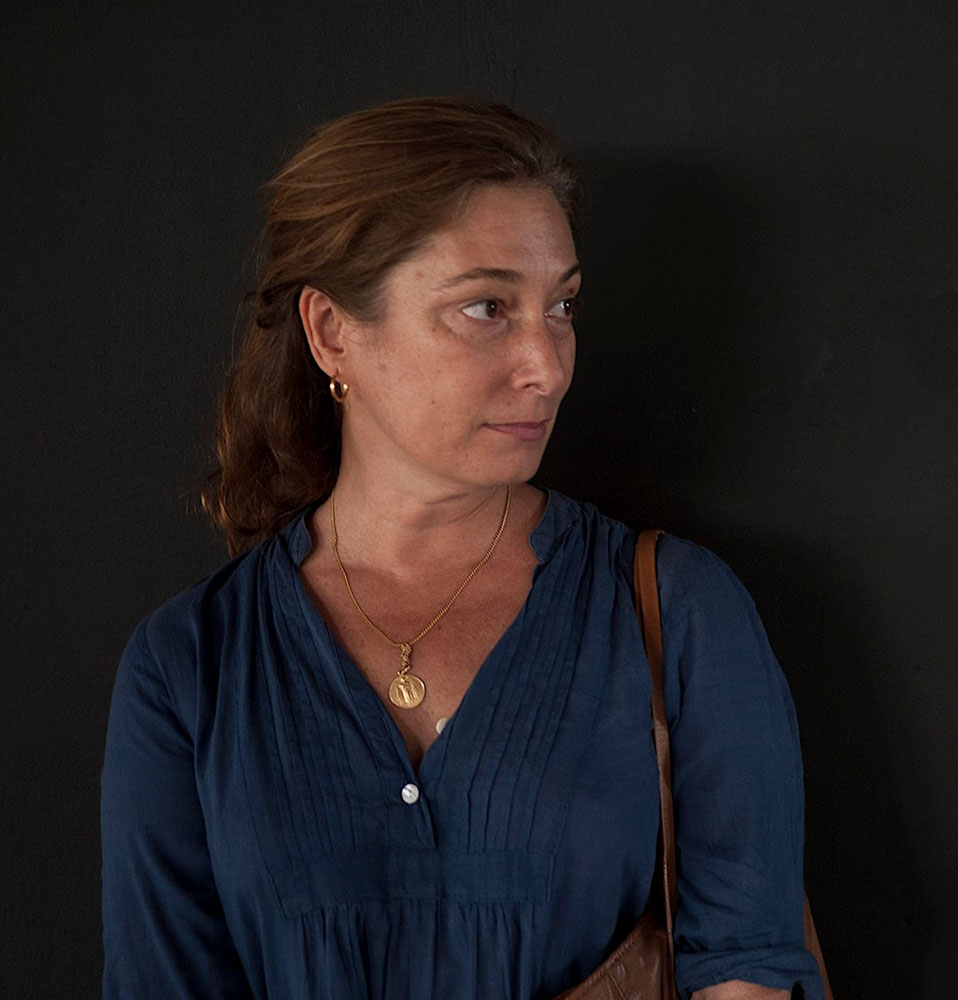
The title of this exhibition by Ana Paganini and Inês Gonçalves, A Prova do Tempo (The Test of Time), refers to one of the main characteristics of photography: each image captures the present moment, yet every photograph also reflects a past moment—the very instant that originally caught the photographer’s eye. Photography lives in these two times. In the four series of this exhibition the two photographers, Ana Paganini and Inês Gonçalves, show us what we often fail to notice. ‘I don't have a philosophy, I have a camera,’ claimed Saul Leiter, the great American photographer. This sentiment is shared by many photographers : the camera is merely a tool an extension of the eye, freezing moments in time. Photography then actually reinterpretes what you see.
Both photographers addressed similar themes: the world of bullfighting and the rituals of religious processions. As this exhibition at Lumina shows, each artist explores these themes in her own distinctive way . Inês Gonçalves took her photographs throughout the 1990s, Ana Paganini started her project two decades later, from 2018 (to the present) onwards. This temporal gap also reflects the exhibition’s title, highlighting that despite the considerable time difference, many commonalities persist. In this regard, I am particularly drawn to Susan Sontag’s notion that ‘photography is testimony’.
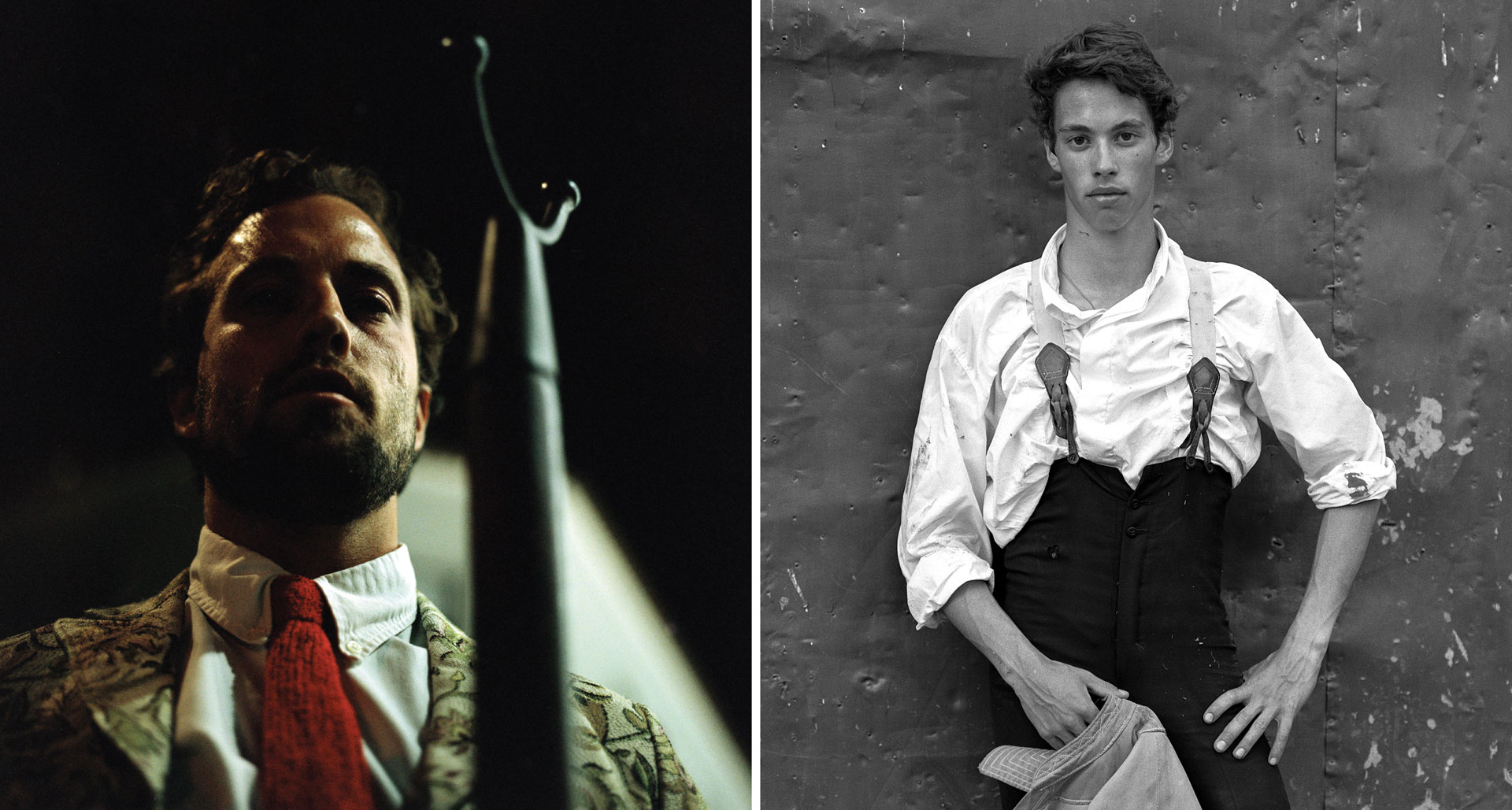
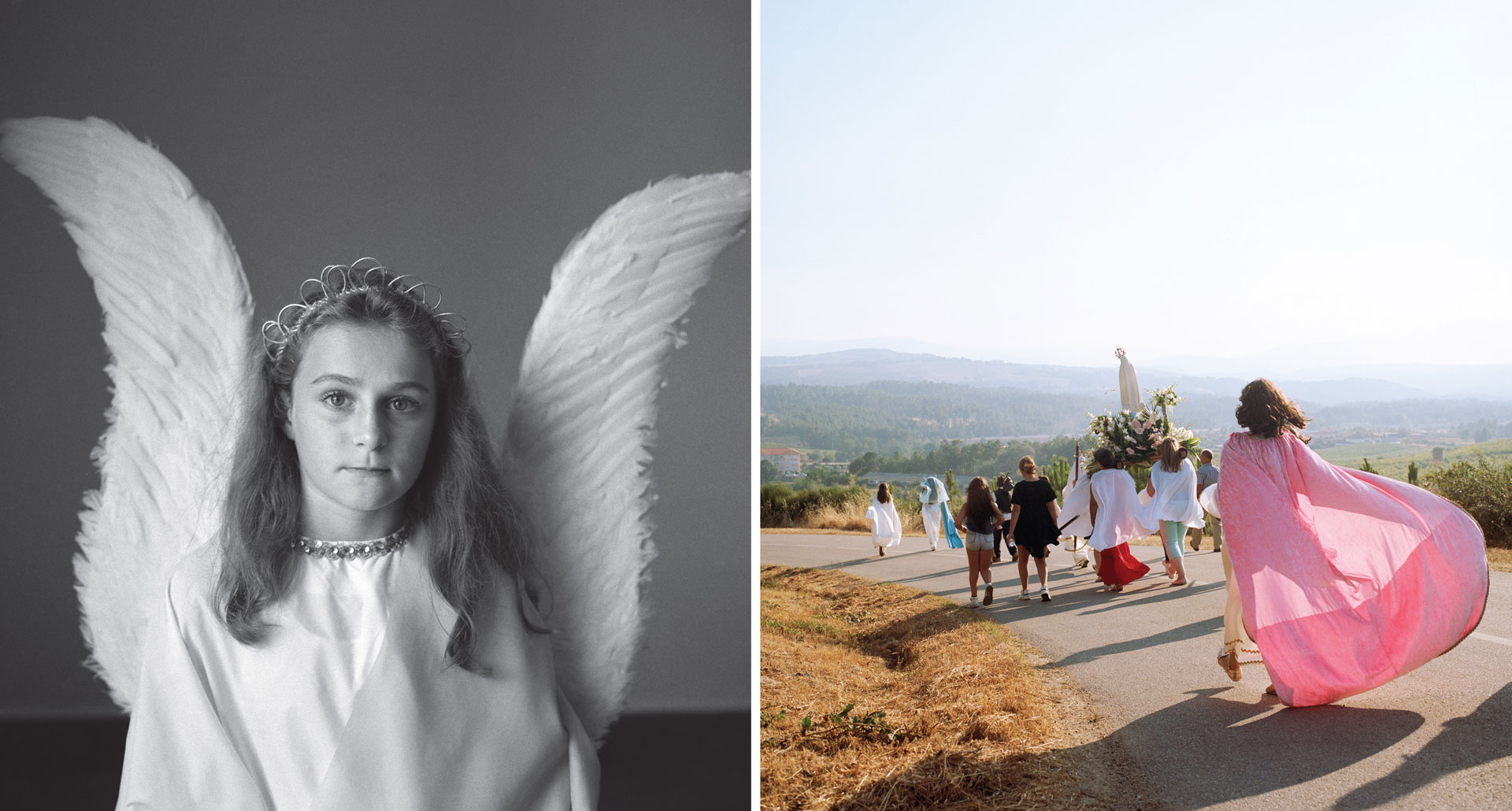
In the world of bullfighting, Inês Gonçalves’s Toureiros (Bullfighters) focuses primarily on the events leading up to the bullfight, whereas Ana Paganini’s Toiros de Morte (Bulls of Death) depicts the action that unfolds during the fight inside the bullring. These are two moments from the same world, and the second cannot exist without the first. Apart from the contrast in imagery—Inês Gonçalves’ photographs are mostly black and white, published in Kapa magazine, versus Ana Paganini’s work is largely in color—almost everything could have been photographed simultaneously, emphasizing time’s role as the custodian of tradition. In the series dedicated to the processions, there is a similar affinity, palpable in the way the solemnity of the ritual is experienced. Inês Gonçalves, who titled this particular work Portugal, photographed in the Azores; most of these images remain unpublished. Ana Paganini captured her photographs both in the north of the country and at a procession in Praia das Maçãs, recording unusual scenes of devotion. Her series is generically titled Jesus' Blood Never Failed On Me Yet; one of the photographs from this project won an award and was exhibited at the National Portrait Gallery in London. Ana Paganini and Inês Gonçalves explored similar themes, each in her own period, two decades apart.
The Test of Time is a particularly apt name – Inês Gonçalves' photographs bear witness to an era and have stood the test of time over almost three decades; Ana Paganini's photographs help us understand what has changed to allow traditions to endure. At separate moments, the two photographers hence end up engaging in a dialogue between what they observed and retained. After all, what is time if not the seed of memory? Miguel Esteves Cardoso’s reflection on the passage of time could marvellously caption this show: ‘Everything in our lives is in the past. The present is just a perch with wheels, which the wind pushes further and further away.’
Manuel Falcão, January 2026
The Test of Time stemsfrom a curatorial proposal by Lumina Galeria that brings together two distinct bodies of photographic work, created at different times but connected by a common artistic intent: the representation of features of Portuguese identity via pagan and religious rituals. Inês Gonçalves, born in the 1960s, and Ana Paganini, born in the 1990s, each developed independent projects that, when considered together, reveal unexpected thematic, formal and symbolic connections.
This common ground is immediately apparent in Festa Brava. Interestingly, both photographers were 30 years old when they documented the key participants in this traditional festivity; Inês Gonçalves focused on bullfighters on foot and the atmosphere among cattle breeders, while Ana Paganini followed the forcados and sought to highlight the participation of women in bullfighting on horseback. Similarly, both photographers share a fascination for popular religious festivals, processions and pilgrimages. In both cases, what is at stake is the body’s subjection to a (greater) higher symbolic order, where individuals are part of a tradition that precedes and transcends them.
The exhibition thus proposes a dialogue between two long-standing traditions of Portuguese identity. The bullfighting and religious festivals function as codified rituals, unfolding within a temporally suspended framework.. While the former presents a confrontation between humans and untamed nature – in an arena of risk, courage and mastery – the latter forges a negotiated relationship with faith, mediated through devotion and the promise of redemption. Both activate a deep collective memory and expose social, ethical and cultural tensions that run through Portuguese history.
Throughout the history of art and photography, these rituals have revisited as extreme expressions of the human condition. For Pablo Picasso, bullfighting was a ‘ballet of art and courage,’ a place where creation, violence, and sacrifice intersect, condensed into the symbolic statement ‘El toro soy yo’ (I am the bull). On the other hand, Cristina García Rodero, over a fifteen-year period beginning in 1973, documented popular religious festivities and processions in Spain, culminating in España Oculta, a seminal work of documentary photography. These antecedents place the work of Inês Gonçalves and Ana Paganini in a visual lineage where the sacred and the profane coexist, and where photography asserts itself as an instrument of memory, interpretation and cultural questioning.
Bringing together two perspectives of extreme sensitivity and aesthetic rigour, The Test of Time does not seek to establish a definitive interpretation of tradition, but rather to open up a space for reflection. Displayed together (in this exhibition), the works of Ana Paganini and Inês Gonçalves reveal how cultural heritage is constructed over time, in the body and in the gaze — striking a delicate balance between permanence and transformation, continuity and reinvention.