Loading...
Skip to Content

Le Mur

O som de fazer o último poema
Maria Gabriela Llansol in Cantileno, p. 25

Le Mur is now the place of containment.

Not that of wandering, but of limits. The wall ceases to be the surface of projection and becomes resistance: that against which the gesture takes its measure and the gaze recognizes itself.

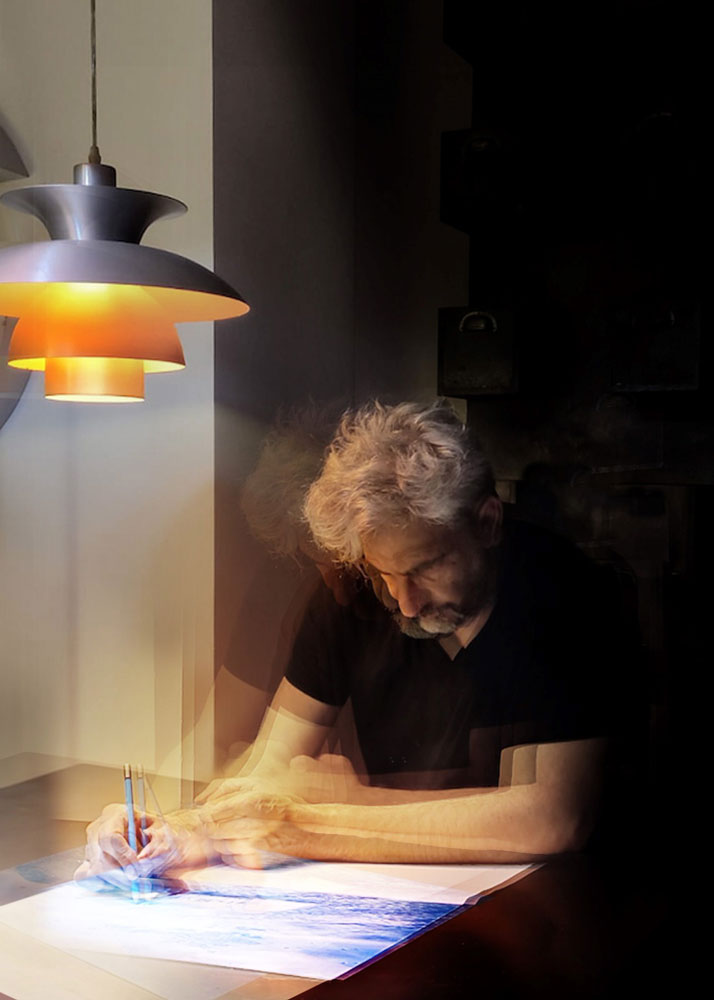
At Sebastião Castelo Lopes's installation, the drawing does not occur in openness. It exists contained, inscribed upon a field that conditions proximity and makes the distance visible. Just as in the arena, where action seems free because it obeys a rigorous perimeter here, too, the gesture asserts itself only because it is suspended.

The containment traverses old practices and repeated rituals, where the body is exposed within inherited forms and belief persists through rules. The excess is not opposite of the limit: it is born from it. The work of Sebastião Castelo Lopes inhabits this paradoxical space, where what remains is not fixed, and what persists is not freed.

The drawing emerges in a state of continuous tension, suspended between assertion and silence. It does not describe, it does not illustrate, it does not resolve. Like something old that endures, the containment does not erase the gesture: it makes it tense, suspended. The cage does not remove the presence, it condenses it, forces it to remain.

This imposed distance is not an obstacle, it’s a condition. The gaze is forced to recognize its own barriers, to accept that there is no such thing as direct access or neutral experiences. The relationship then becomes akin to that of a ritual: we believe in spontaneity, but we know it is constructed, reiterated, sustained by other forms that precede the subject.

In juxtaposition with A Prova do Tempo, this piece shifts the centre of attention from the visible gesture, to that which sustains it and repeats it. If photography fixes the body in exposure and the shared instant, here it reveals the silent architecture that pierces time, allowing the gesture to return, never the same.

In Le Mur, the wall becomes a silent arena, not the place of evident action, but of continued permanence.

Where the drawing does not retire, but persists
Where belief does not assert itself, but remains.
Because what travels through time is not what expands,
but what learns to last within its confines.

It is, in that friction between presence and containment, that the last poem is drawn.

Rute Reimão

Sebastião Castelo Lopes

O Som de fazer o último Poema

Rute Reimão