Witnessing Life
Paula Bronstein
21.11.2026 :: 16.01.2027
(closed from 20 December 2026 to 5 January 2027)
Wednesday to friday 03:00 pm - 07:00 pm, saturday till 08:00 pm
CURATING ‘WITNESSING LIFE’
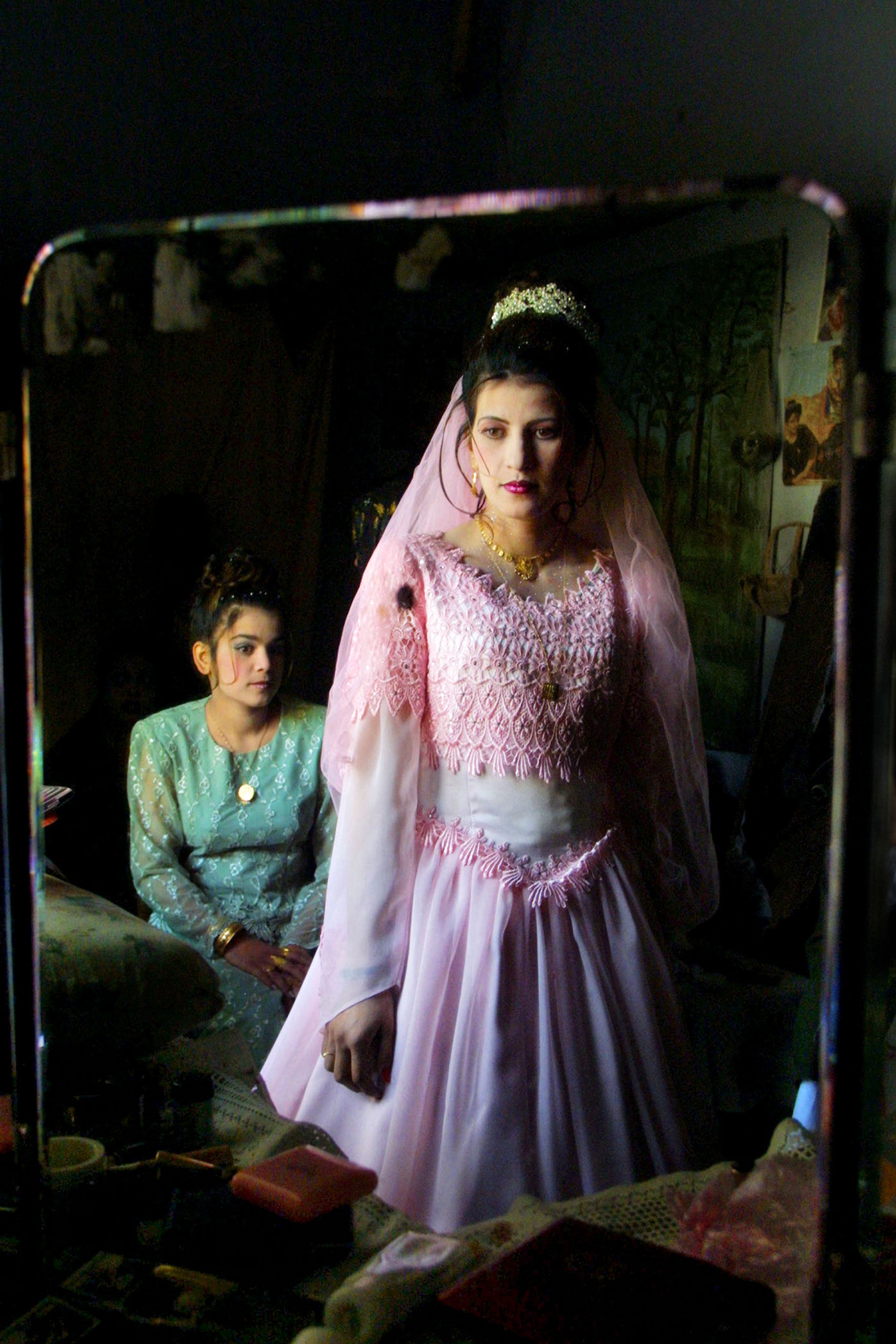
The images in Witnessing Life, a Retrospective reveal Paula Bronstein’s extraordinary gift for making us feel, learn and, above all, ask questions. Her photographs draw us into others’ lives through a face or gesture, shadow and light, or intricate visual tableaux. They compel us to linger and discover new meanings each time we return.
Among the images selected for this exhibition are moments of exquisite beauty and fragility, fleeting tenderness that might otherwise pass unnoticed. Alongside them are people whose worlds have been shattered by war, displacement, injustice and natural disaster. Marked by suffering and loss, these lives are also defined by resilience. Through the Lumina Gallery exhibition, we wanted to open a window onto unfamiliar worlds that demand our attention and empathy. At its most powerful, photography bridges that distance and allows us to bear witness.
Editing the book with Paula was an exceptional journey lasting more than a year. The process revealed the extraordinary breadth of four decades of photography. We immersed ourselves in thousands of images, examining, debating and revisiting them in an intimate undertaking.
I have worked with extraordinary talent and encountered countless remarkable images. Yet Paula repeatedly overwhelmed me: through the scale of her achievement, her courage and determination. A photojournalist of profound conviction, she goes towards places from which many instinctively turn away, documenting cruelty, injustice, conflict and natural disaster. Her work allows no indifference. It restores individuality and dignity to people otherwise reduced to statistics or headlines, reaching beyond the documentary record to touch something deep within the human soul.
In my career I have never lost the capacity to be moved by a photograph of visceral force. Some disturb our equilibrium and resonate long after we have turned the page. Paula has that rare ability. Her photographs stop me in my tracks. They make me look again, think again and feel again.
There is another dimension to her work. Beyond tragedy and hardship lies a joyous celebration of life: its tenderness, cultural richness, diversity and beauty. She notices the gestures that connect us and the many ways people live, celebrate, love and express their identities. These photographs remind us that the world cannot be understood through suffering alone. Even in difficult circumstances, beauty persists; moments of joy and connection endure. This counterpoint is essential to Paula’s work and its humanity.
These dimensions shaped our approach to the book. Rather than follow a chronological sequence, we organised the photographs thematically, allowing ideas and experiences to speak across time and geography. Her ongoing coverage of Ukraine was an obvious choice for the cover and opening chapter. It establishes the urgency of her witnessing and the book’s concerns: conflict, displacement, resilience and the human cost of history. We also wanted moments of respite, interweaving hardship with photographs celebrating cultural exploration, diversity, beauty and everyday life. The intention was to place difficult images within the fuller spectrum of human experience.
Sequencing and designing the book became an absorbing exercise in visual dialogue. Which photograph should follow another? Do images create harmony or unsettle one another? Can a neighbour change an image’s meaning? We considered each photograph’s strength and the rhythm of the whole. Nothing was fixed for long: another image would emerge from Paula’s archives, altering the balance or suggesting a new connection. An archive of this magnitude is never exhausted.
Some photographs in this book are difficult to look at. We should not turn away from the realities they reveal. To do so would deny those who have endured unimaginable hardship: victims of conflict, the displaced and dispossessed, whose lives have been irrevocably altered by the loss of home, family and any clear vision of the future.
We must understand refugees who leave everything behind in hope of safety and a new beginning. Their journeys are perilous and their future uncertain. Too often, refuge gives way to limbo between the past they have fled and a future beyond their grasp. Paula’s coverage of displacement and migration bears witness to this immense human tragedy. More importantly, she brings us face to face with the individuals behind the movement: their vulnerability, courage, dignity and determination to survive.
Ultimately, Witnessing Life is more than a retrospective of an extraordinary photographic career. It invites us to look more closely at the world, question what we think we know and acknowledge lives otherwise unseen. Paula’s photographs remind us that witnessing is not simply observing; it is engaging, feeling and recognising our shared humanity.
That, perhaps, is the greatest achievement of her work. Whether documenting the darkest consequences of conflict or capturing a fleeting moment of tenderness and joy, Paula never loses sight of the person in the image. She makes us pause, care and, long after we have left the gallery or closed the book, remember.
Maria Mann
Lisboa, November 2026
Paula Bronstein
Press release